
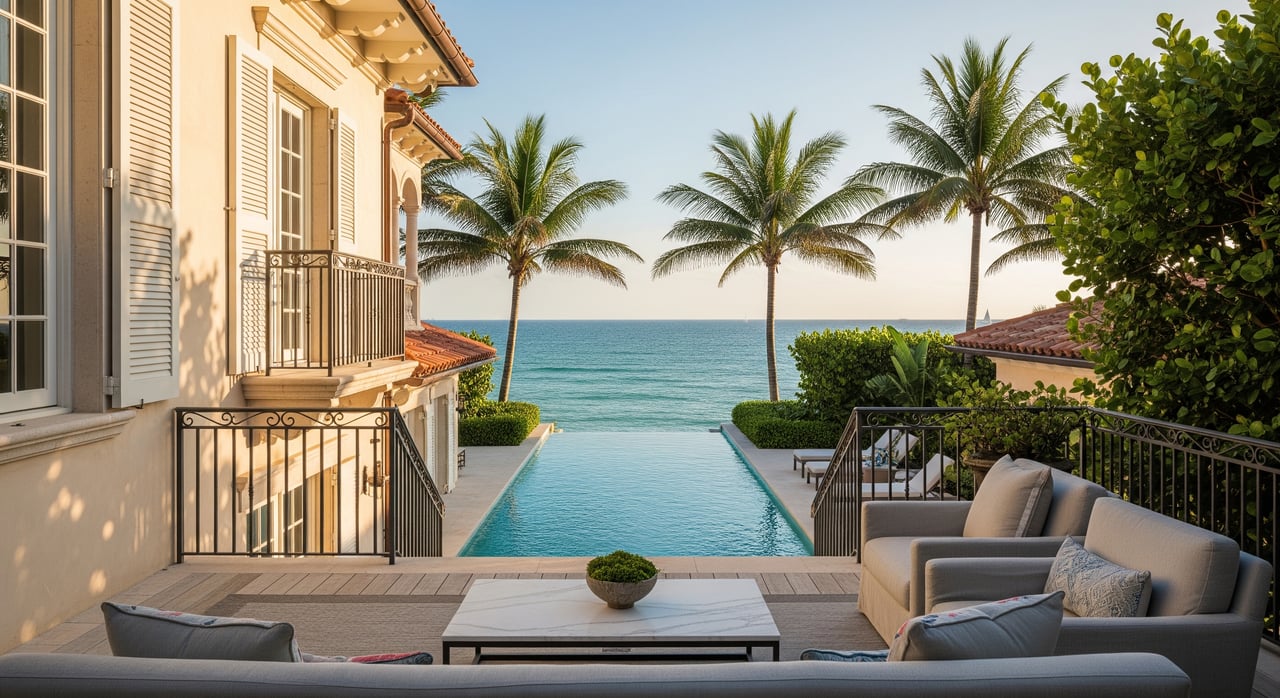
Picture your morning starting with a barefoot walk on soft sand, a quiet swim, and coffee overlooking the Intracoastal. That is a normal day on Palm Beach Island, where life leans calm, polished, and service oriented. If you are exploring the island as a potential home or second home, you want to know how it actually feels to live here day to day. In this guide, you will get a clear view of routines, amenities, homes, and practical costs, plus how Palm Beach compares to other South Florida enclaves. Let’s dive in.
Morning rhythms by the water
Palm Beach mornings are slow and intentional. Many residents start with beach walks or ocean swims along the town-managed coastline. You will also see cyclists and joggers on quiet, landscaped streets with ocean breezes.
Breakfast often means a waterside table on or near the Intracoastal. You will notice the pace is relaxed and residential. Even during the season, the island stays low-rise and feels intimate compared with bigger South Florida cities.
Dining and café culture
Dining on the island ranges from casual cafés and bistros to destination restaurants inside landmark hotels. The Breakers and other long-established resorts anchor fine dining, while chef-driven spots add variety.
Season matters. Winter brings fuller reservation books and longer waits. Year-round, the food scene stays upscale and service focused, with classic Palm Beach institutions alongside newer concepts.
Shopping on Worth Avenue
Worth Avenue is the island’s signature shopping street. You will find designer boutiques, galleries, jewelers, and specialty shops in a cohesive, low-rise setting. The experience is curated, with attentive service and beautiful architecture.
For day-to-day needs and more boutiques, Royal Poinciana Plaza and nearby retail nodes add options. Shopping here prioritizes personalized help over large mall formats. It is more about experience than volume.
Clubs, golf, tennis, and polo
Private clubs are a defining part of social life for many residents. Memberships can be selective, with initiation fees and wait lists. If club culture is important to you, availability and timing may influence your move.
You will find additional golf and tennis options off-island, and seasonal equestrian and polo programming in Wellington supports a winter social calendar for riders and spectators. Many residents split time between the beach and these off-island activities.
Beach access essentials
Palm Beach offers a mix of public beach access points and stretches managed by hotels or private clubs. Public access is often at street ends and municipal locations. Private and hotel-managed areas are also common.
Parking near popular access points can be limited in the high season. The town and county manage dunes and renourishment, which can affect entry points, beach width, and amenities over time. It is smart to check access near any property you are considering.
Getting around
Commercial areas are walkable, especially Worth Avenue, Royal Poinciana Plaza, and parts of downtown near the beaches. Many residential streets are quiet and best reached by short drives.
Most residents use cars for errands. Parking around retail is controlled with meters and limited stalls. For regional travel, Palm Beach International Airport sits just over the bridge in West Palm Beach. You also have Brightline and Tri-Rail there for rail connections. A daily commute to Miami is possible but lengthy.
Schools, healthcare, and services
With a small island population, many services sit just across the bridges. Major hospitals, specialty medical providers, and many private schools are on the mainland in West Palm Beach and nearby areas.
Public schools fall under the Palm Beach County School District. Families often evaluate a mix of public and independent schools across the broader county. The short drive to the mainland keeps these options practical.
The homes you will find
Palm Beach’s housing stock leans upscale and architecturally distinct. You will see oceanfront estates and beachfront condos, Intracoastal mansions with docks, and historic Mediterranean Revival and Colonial-style homes.
Closer to downtown and Worth Avenue, smaller condominium buildings and townhouses create a boutique feel. Compared with denser South Florida markets, lots can be larger and more estate oriented, with mature landscaping and preserved architecture.
Pricing and market character
Palm Beach is an ultra-luxury market. Many single-family homes and condos trade at multi-million-dollar price points, with rare trophy estates reaching the highest tiers. At the same time, you will sometimes find smaller resale condos at lower price bands, though they are uncommon.
The market is seasonal and can be influenced by a handful of high-value sales in any given year. Over the past few years, coastal luxury segments saw strong demand and appreciation, yet luxury markets remain cyclical and sensitive to interest rates and broader wealth trends. Partnering with a local advisor helps you interpret limited inventory and timing.
Ownership costs to expect
Florida has no state income tax, which is relevant if you are comparing domicile choices. Primary residents may benefit from a homestead exemption that can reduce property tax liability, while second-home owners typically do not qualify.
Beyond taxes, plan for meaningful carrying costs. These can include homeowners association or club initiation and dues, insurance premiums for wind and flood, and higher maintenance for coastal and historic properties. Documentary stamp taxes and standard Florida closing costs also apply.
Insurance and resiliency
The island is exposed to hurricane winds, storm surge, and tidal flooding. Properties often require wind coverage and many fall within FEMA flood zones where federal or private flood insurance is needed.
Florida’s property insurance market has faced pressure, contributing to higher premiums and a shift to state-backed options for some owners. Elevation, finished-floor heights, and prior flood history should be part of your due diligence. Sea-level rise and dune management are active policy areas that can influence risk and beach conditions over time.
Renovation and preservation
Palm Beach maintains strong planning and design controls. Historic districts and the town’s landmarks program protect architectural character. If you plan to renovate or rebuild, engage with the Town of Palm Beach planning and landmarks offices early in the process.
Contemporary building codes and coastal standards will shape scope and cost. Expect requirements like impact-rated windows, structural upgrades, and elevation considerations that reflect coastal conditions.
How Palm Beach compares nearby
Compared with Miami and Miami Beach, Palm Beach is more residential and low-rise, with less nightlife and a quieter feel. Miami offers a denser, more urban environment and a younger, more nightlife-focused culture.
Bal Harbour and Surfside lean condo-centric with significant high-rise development and luxury retail. Palm Beach tilts toward estates, low-rise buildings, and boutique streetscapes.
Fisher Island is highly exclusive and more isolated, accessed mainly by ferry or private boat. Palm Beach is connected by bridges, features public shopping and hotels, and supports a larger year-round municipal structure.
Jupiter Island can feel more rural and ultra low-density. Palm Beach blends grand estates with a visible downtown axis for shopping and dining. Nearby Palm Beach Gardens and Wellington offer suburban variety and world-class equestrian amenities, but with a different lifestyle from the island’s beachfront rhythm.
Is Palm Beach a fit for you
If you value privacy, service, and low-rise charm, Palm Beach may fit you well. The island shines for beach walks, upscale dining, and a formal social calendar built around clubs and seasonal events.
It is also a good match if you want larger lots, preserved historic character, and quick access to mainland services without urban density. If you prefer high-rise energy and nightlife, Miami Beach or Bal Harbour might align better with your day-to-day style.
Next steps
Your next step is to walk the neighborhoods, test the commute over the bridges, and align your wish list with the island’s specific inventory. If you plan to build or renovate, confirm zoning, design review, and flood considerations early.
When you are ready, connect with a local, senior-level advisor who can preview properties, coordinate private showings, and map out carry costs and club timelines. For personalized guidance and discreet, concierge-level representation, reach out to IJL Real Estate Group. Book an Appointment and let us help you move with confidence.
FAQs
What is daily life like on Palm Beach Island
- Expect quiet, service-oriented luxury with morning beach time, boutique shopping on Worth Avenue, quality restaurants, and a seasonal social calendar, especially in winter.
Are the beaches public or private in Palm Beach
- You will find a mix of public access points at street ends and municipal entries, along with stretches managed by hotels or private clubs; check access near any property you consider.
How walkable is Palm Beach Island for errands
- Commercial zones are walkable, including Worth Avenue and Royal Poinciana Plaza, while many residential streets are reached by short drives; biking and walking are common for short trips.
What ongoing homeowner costs should I expect
- Plan for property taxes, association or club dues if applicable, higher wind and flood insurance premiums, and coastal or historic maintenance, plus typical Florida closing costs at purchase.
How does flood risk affect buying on the island
- Elevation, FEMA flood zone, and past flood history matter for insurance and resilience; many homes require wind and flood coverage, and mitigation steps can influence costs.
How does Palm Beach compare to Miami Beach
- Palm Beach is lower-rise and more residential with a quieter nightlife profile, while Miami Beach is denser, more urban, and more nightlife oriented with many high-rise condos.
Can I live on Palm Beach Island year-round
- Yes. Many residents are seasonal, but year-round living is common; services and restaurants tend to be busier in winter while daily life stays consistent throughout the year.