
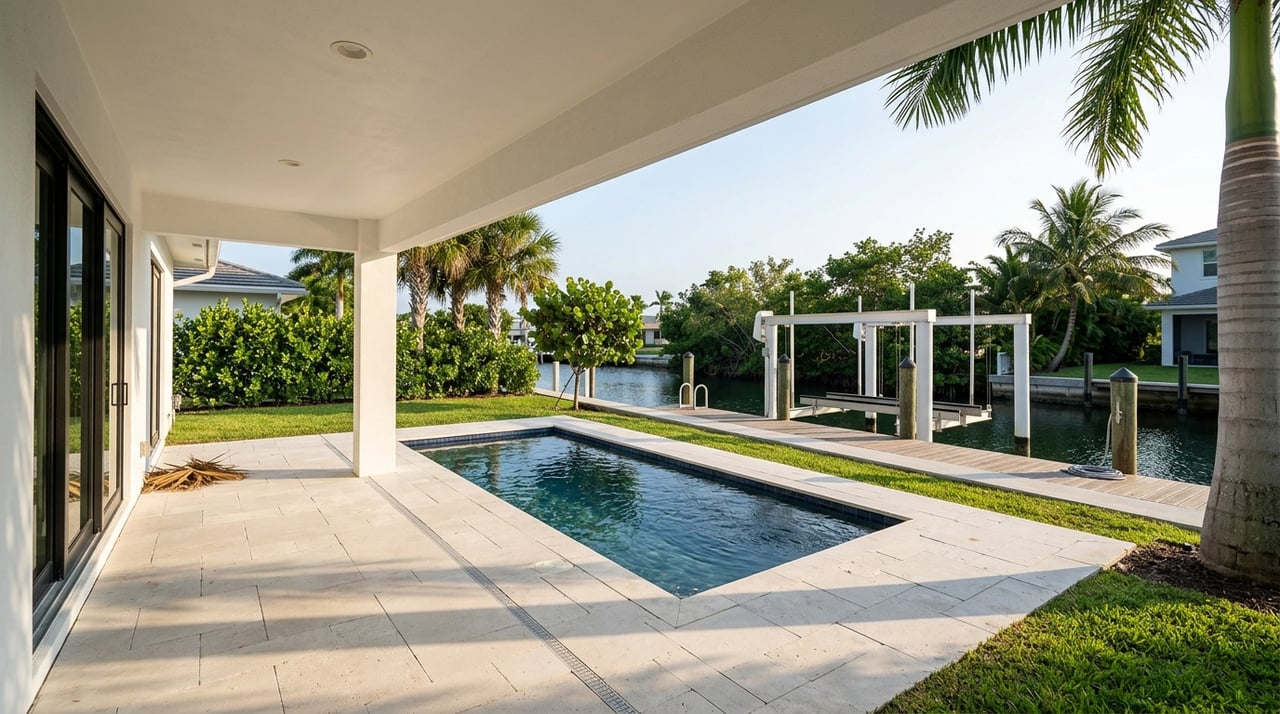
If you are searching for a Tequesta home with boating access, one word can mislead you fast: waterfront. In this market, the real question is not whether a property touches water, but whether that water actually works for your boat, your lifestyle, and your route to Jupiter Inlet. Understanding that difference can save you time, money, and frustration, so let’s dive in.
Tequesta waterfront means different things
Tequesta’s boating lifestyle is shaped by three main settings: riverfront homes, canal-front homes, and properties near the Intracoastal corridor. Each one offers a different mix of access, protection, and day-to-day usability.
The local water network centers on the Loxahatchee River and the Jupiter Inlet and Intracoastal Waterway corridor. That system supports everything from paddling and short local rides to regional boating routes, but not every home gives you the same kind of access.
For many buyers, this is the most important takeaway: a beautiful view and a usable dock are not always the same thing. Two homes may both be marketed as waterfront, yet one may fit a paddleboard and skiff while the other may better support larger boating plans.
Riverfront homes and North Fork access
Riverfront and North Fork properties often appeal to buyers who want a calm, protected water setting. These homes can be a strong fit if you picture kayaking, paddleboarding, fishing, or shorter local trips on the water.
There is also an important bridge factor to keep in mind. A federal navigation report lists the Tequesta Drive Bridge over the North Fork as a fixed bridge with 11 feet of vertical clearance.
That clearance can affect what kind of vessel works comfortably upstream. In practical terms, homes beyond that point are often better suited to low-profile boats, kayaks, paddleboards, skiffs, and similar watercraft than to taller boats.
If your boating style is more nature-focused than offshore-focused, this part of Tequesta may feel like a natural match. It can offer easier access to the river experience many buyers want without requiring a direct ocean-running setup.
Canal-front homes need closer review
Canal-front homes can be attractive because they often offer a private-waterfront feel in a more sheltered setting. Still, canal access in Tequesta is not one-size-fits-all.
According to the village’s community development guidance, dock or pier length, width, and configuration depend on whether the property fronts the Loxahatchee River, the Intracoastal Waterway, or a canal. The village directs owners to Chapter 76 of the local code for the specific rules.
That means dockability can vary from one property to the next, even when listings look similar online. Before you make an offer, it is smart to confirm what is currently permitted, what exists on site, and whether your intended boat use is realistic.
Intracoastal-adjacent homes and regional boating
If your goal is broader boating access, homes tied more directly to the Intracoastal corridor may be the strongest fit. These properties tend to matter most for buyers who want easier movement toward Jupiter Inlet and the wider regional waterway system.
Even here, the route still matters. FDOT says the current U.S. 1 bridge replacement over the Loxahatchee River and Intracoastal Waterway has up to 42 feet of vertical clearance and a 125-foot navigable channel.
Other route constraints remain part of the planning process. NOAA’s Coast Pilot identifies additional bridge limits farther west on the Loxahatchee River, including State Route 706 at 35 feet, Alternate A1A at 25 feet, and the FEC railroad bridge at 4 feet.
For buyers with taller boats, these details matter as much as the home itself. A property can look ideal on paper, but if your full route includes a low clearance, your actual boating use may be more limited than expected.
Jupiter Inlet access is valuable, but not simple
Many buyers focus on how quickly they can reach Jupiter Inlet, and that makes sense. It is the area’s key connection to the ocean and a major part of the local boating appeal.
At the same time, quick inlet access is not the same as easy access for every boat or every boater. NOAA describes Jupiter Inlet as dangerous and particularly hazardous to small boats not designed for open seas.
That is why route planning should go beyond map distance alone. You want to think about boat type, weather sensitivity, comfort level, and how often you realistically plan to use the inlet.
Questions to ask before buying a waterfront home
A smart waterfront search in Tequesta starts with more specific questions than “Is it on the water?” You want to know how the property functions in real life.
Here are some key questions to ask as you compare homes:
- Which waterway fronts the property: North Fork, canal, river, or Intracoastal-adjacent water?
- Is there an existing dock or pier, and is it usable for your intended watercraft?
- What bridge clearances affect the route from the home to your usual boating destination?
- How do tides affect dock usability and daily access?
- What local rules apply to dock size, placement, or watercraft storage?
- Does the property’s setup support paddling, fishing, in-town cruising, or larger-route boating?
These questions help you look past listing language and focus on what will actually work for you.
Boat permits and local rules matter
In Tequesta, practical boating ownership also includes local compliance. The village requires a no-fee permit for the parking and or storage of watercraft at residences, including condominiums and common areas such as private decks and parking garages.
That requirement is easy to overlook, especially if you are relocating from outside the area. It is one more reason to verify how a property functions under current local rules before you close.
For waterfront buyers, code details are not just paperwork. They can affect convenience, storage planning, and how you use the property day to day.
Flood exposure is part of waterfront ownership
Flood risk is a major part of the Tequesta waterfront picture. The village states that floods can result from tidal surges, heavy rains, clogged drainage pipes and ditches, and sea-level rise.
The village also says all residents live in a flood zone and provides resources related to flood zones, flood insurance, elevation certificates, and mitigation. That makes flood planning relevant whether you are buying direct waterfront or simply near the water.
For buyers, this is not just a closing-cost issue. Flood exposure can shape insurance, maintenance planning, and how comfortable you feel with the property over time.
Tides affect daily livability
Boating access is not only about big-picture route planning. In Tequesta, tides can also influence everyday livability and dock use.
The village points residents to real-time tidal gauges at North Fork, North Fork Entrance, Tequesta, the A1A Bridge, and the Loxahatchee River at County Line. That tells you something important: tide level is not just background information here.
Depending on the property, tide changes may affect launching, docking, drainage, and the feel of the lot during certain conditions. It is worth treating this as part of your home search, not just a boating detail.
Public water access without a private dock
Not every buyer needs deeded dockage to enjoy Tequesta’s water lifestyle. If you plan to trailer your boat or prefer paddling and beach access, nearby public launch points and parks can make a big difference.
Jupiter’s official boating page lists Waterway Park with three concrete ramps and canoe and kayak access. It also lists Burt Reynolds Park, just south of Jupiter Inlet, with 24/7 ramps, and Jonathan Dickinson State Park with a rebuilt Loxahatchee River ramp and idle-speed restrictions on the river inside the park.
For buyers who want flexibility without paying for a private dock setup, these nearby options can add real value. In some cases, an inland or non-dock property may be the better overall lifestyle fit.
Coral Cove Park adds local waterfront lifestyle
Inside Tequesta itself, Coral Cove Park is a standout water-access amenity. Palm Beach County lists 600 feet of guarded beach, 2,010 feet of unguarded beach, and 600 feet of Intracoastal Waterway frontage at 1600 Beach Road.
The county also lists Coral Cove among its shore snorkeling locations. In addition, the park includes saltwater fishing, picnic areas, a playground, restrooms, and outdoor showers.
If your idea of waterfront living includes more casual beach time, shore snorkeling, or simply being close to the water without maintaining a dock, Coral Cove is an important part of the local lifestyle picture.
Matching the home to your boating style
The right Tequesta home depends on how you actually want to use the water. Buyers who love paddling and protected scenery may gravitate toward North Fork or river-oriented homes.
Trailer-boaters may care more about staying close to public ramps and the broader Jupiter waterway system. Buyers with taller boats or more demanding routes usually need to pay closer attention to bridge clearances, route constraints, and real-world inlet conditions.
This is where local guidance matters. The best fit is rarely about the broadest marketing label. It is about choosing the property that supports your boat, your habits, and your comfort level on the water.
If you are weighing Tequesta waterfront options, IJL Real Estate Group can help you compare properties with a practical, local lens and find the setup that truly fits your lifestyle.
FAQs
What does waterfront mean for Tequesta homes?
- In Tequesta, waterfront can mean riverfront, canal-front, or Intracoastal-adjacent property, and each type offers different dock, route, and boat-use potential.
What bridge clearance affects North Fork boating in Tequesta?
- The Tequesta Drive Bridge over the North Fork is listed with 11 feet of vertical clearance, which can make upstream homes more suitable for lower-profile watercraft.
What should buyers check before buying a canal-front home in Tequesta?
- You should confirm dock or pier rules, the existing setup, route usability, and whether the property’s water frontage supports your planned boat use.
Do Tequesta homeowners need a boat permit for residential watercraft storage?
- Yes, the village requires a no-fee permit for the parking and or storage of watercraft at residences, including certain condominium and common-area locations.
Are all homes in Tequesta affected by flood-zone considerations?
- The village says all residents live in a flood zone, so flood exposure, insurance, elevation information, and mitigation planning are important parts of the buying process.
Where can you access the water near Tequesta without a private dock?
- Nearby options include Waterway Park, Burt Reynolds Park, Jonathan Dickinson State Park, and Coral Cove Park for boating, paddling, beach access, and other water activities.